
Discover the safety protocols, route planning, and tracking systems we use to guarantee your cargo arrives on time and in perfect condition—anywhere in the country.


The GCC (Gulf Cooperation Council) region has become a hub for trade, connecting Asia, Europe, and Africa. However, cross-border logistics across GCC countries (Saudi Arabia, UAE, Oman, Kuwait, Qatar, Bahrain) can present challenges.
On-time delivery isn’t just a promise—it’s a standard we live by. Every mile, every shipment is backed by planning, precision, and accountability. Because when your cargo is on our trucks, it’s our reputation on the line.
1. Understand Customs and Trade Regulations
Customs rules differ from country to country. Incorrect or missing documents can cause unnecessary delays.
Ensure complete documentation like invoices, permits, and certificates.
Partner with logistics providers who know regional laws and can handle clearance smoothly.
Stay updated with tariff changes and duty regulations to avoid surprises.
2. Plan Efficient Shipping Routes
Not all transport routes are equally efficient. Choosing the wrong one may cause congestion or delays.
Use data-driven planning to map out the shortest and safest routes.
Consider alternative border crossings in case of high traffic or seasonal congestion.
Optimize schedules to avoid peak transit hours where possible.
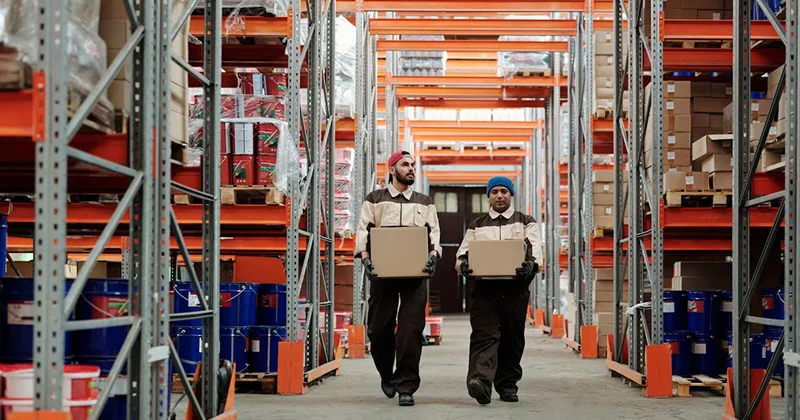
3. Leverage Technology for Smarter Logistics
Technology is transforming shipping efficiency across the GCC.
Real-time tracking ensures businesses and customers know shipment locations.
Automated documentation reduces human error in customs filing.
Predictive logistics tools can forecast delays and suggest alternatives.
4. Work with Experienced Logistics Partners
An experienced logistics provider ensures reliability when shipping across multiple GCC countries.
Look for companies with proven cross-border experience.
Ensure they have regional partnerships with carriers and agents.
Ask about service guarantees for on-time deliveries.
Learn how we plan every shipment—from initial booking to delivery—with built-in checks and contingency measures to avoid delays.
Explore our GPS tracking, automated scheduling, and digital proof-of-delivery tools that give clients real-time visibility and control.
See how our regularly maintained, modern fleet is equipped for all freight types—ensuring both safety and speed.
To achieve this, it would be necessary to have uniform grammar, pronunciation and more common words. If several languages coalesce, the grammar of the resulting language is more simple and regular than that of the individual languages. The new common language will be more simple.
It will be as simple as Occidental; in fact, it will be Occidental. To an English person, it will seem like simplified English, as a skeptical Cambridge friend of mine told me what Occidental is. The European languages are members of the same family.
Cross-border shipping in the GCC can be challenging, but with the right approach, businesses can achieve reliable and timely transit. By following these best practices and partnering with a trusted logistics provider, you can streamline operations and build stronger trade networks.


Comments
adamgordon
Thanks for sharing this post, it’s really helpful for me.
cmsmasters
Glad to be of service.
annabrown
This is awesome!!
cmsmasters
Thanks.